
The short answer
10DLC stands for "10-digit long code": an ordinary ten-digit US phone number used by a business to text customers. The "A2P" you will see next to it means application-to-person: messages sent by software on your behalf rather than typed by hand on a handset.
Since 2021 the US mobile carriers have required every business that sends A2P texts from a long code to register who it is and what it sends. That registration is 10DLC. Without it, carriers filter or block the traffic. With it, your messages are delivered at a throughput the carriers assign to you, and your texts carry a verified sender identity instead of looking like a burst of spam from an anonymous number.
If you text leads from a CRM, a dialer or any automation, you are sending A2P. 10DLC is not optional for you.
Why the carriers built it

Long codes were designed for people texting people. Businesses used them for bulk sending because they were cheap and instant, and so did scammers. Carriers could not tell a Medicare agent following up on a quote from a phishing operation, so they treated all volume from long codes the same way: throttle it, filter it, sometimes block it.
10DLC replaced guessing with registration. A registered sender is a known business with a verified tax ID, a stated use case and sample messages on file. In return the carriers commit to a throughput tier, and filtering drops because the traffic is expected. Carriers now block unregistered A2P traffic from ten-digit long codes.
What registration involves

Registration runs through The Campaign Registry (TCR), the industry body the carriers use, submitted from your messaging platform. It has two layers.
1. Brand registration: who you are
Your business is registered as a brand with its legal name, EIN, address, website and contact. The Campaign Registry verifies the EIN and legal name against business-registration records. Individuals without an EIN can register as a sole proprietor, but that path carries a low daily sending limit, so an agency or an agent with an LLC should register the entity.
A brand can also be vetted. Vetting is an optional, deeper check of your company by The Campaign Registry's approved vetting partner: it confirms the business exists as registered, matches the legal name, EIN and address to public and commercial records, and looks at how long the company has operated and whether it is in good standing. The result is a trust score from 1 to 100, and that score sets how much you are allowed to send. An unvetted brand gets the lowest tier by default. A low score is usually a mismatch between what you entered and what the records say, not a judgment on your business, and it can be corrected and re-submitted.
2. Campaign registration: what you send
Each distinct kind of messaging is a campaign with a use case. For an agent the usual ones are:
- Low-volume mixed: follow-ups, notifications and some marketing from one small sender, with a daily cap.
- Mixed or Marketing: the standard tiers for an agency texting at volume.
- Customer care or Account notification: appointment confirmations, reminders, policy updates.
A campaign registration asks for a description of the use case, two to five sample messages, a description of how people opt in (with evidence: a screenshot of the form, the website wording or the script) and confirmation that STOP and HELP keywords are handled.
The campaign is reviewed by the direct connect aggregator, the company that hands A2P traffic to the carriers, before the carriers accept it. That review takes 2 to 5 business days. You can submit the registration from inside ApexSales.ai as soon as your account exists; the wait is the review, not the paperwork.
What it costs

Registration is a pass-through charge. In ApexSales.ai it is $49 to register your brand and campaign, or $91 with vetting included (the trust-score check described above).
Each message segment is then billed at the carrier rates on our billing page: $0.0075 per SMS segment on Verizon, AT&T and T-Mobile, and $0.006 to $0.01 on other carriers.
What it unlocks: throughput and trust

This explains most "my texts stopped going through" complaints.
Carriers assign throughput by tier. Some cap the number of segments your brand can send per day; others set a rate per campaign in messages per minute. In both cases the tier comes from your trust score, and it applies to your brand or campaign as a whole, not to each phone number.
Two consequences follow. Adding phone numbers does not raise your cap; only a better trust score does. Number rotation still helps, because it spreads reputation and keeps local area codes in front of your leads, but it is not a way around a cap or around filtering: spreading texts across extra numbers to get around carrier filtering is what CTIA's messaging guidelines call snowshoeing. And a brand that was never vetted sits in the lowest tier by default, which is why a new agency can hit a wall on its first day.
If you are sending to a list, the deliverability diagnostic walks through what to check when volume stalls.
What gets campaigns declined
Reviewers reject for a predictable set of reasons. All are avoidable.
- Opt-in you cannot show. The registration must describe how a person agreed to receive texts, and the reviewer wants to see it. "They gave us their number" is not an opt-in.
- A privacy policy that is silent on texting. Your website's privacy policy must say what you do with mobile numbers, and that mobile information is not shared with third parties for their marketing.
- Sample messages that do not match the use case. A campaign registered as appointment reminders whose samples read like a promotion gets declined; a live campaign that sends something other than what it registered gets filtered later.
- No opt-out language. The first message, and periodically after, should tell the recipient how to stop.
- Public link shorteners. Shared domains like bit.ly are treated as a spam signal. Use a branded or platform-provided domain.
- Prohibited content. Sex, hate, alcohol, firearms and tobacco, high-risk financial offers, debt relief, and third-party lead generation or affiliate marketing. An agent texting prospects about their own book is a standard use case; a campaign whose purpose is to collect and resell leads is not.
What 10DLC is not

10DLC is a registration with the carriers. It is not permission from the person you are texting.
Consent for marketing texts is governed by the TCPA and its state equivalents, and those obligations do not change because your brand is registered. A fully registered campaign sending to numbers that never opted in is both a carrier problem and a legal one. Keep the two in separate columns: where the TCPA rules stand for consent, and the state-by-state calling and texting hours for timing. Medicare marketing adds its own layer on top. You remain responsible for your own compliance; a platform can enforce guardrails, not consent.
10DLC versus the alternatives
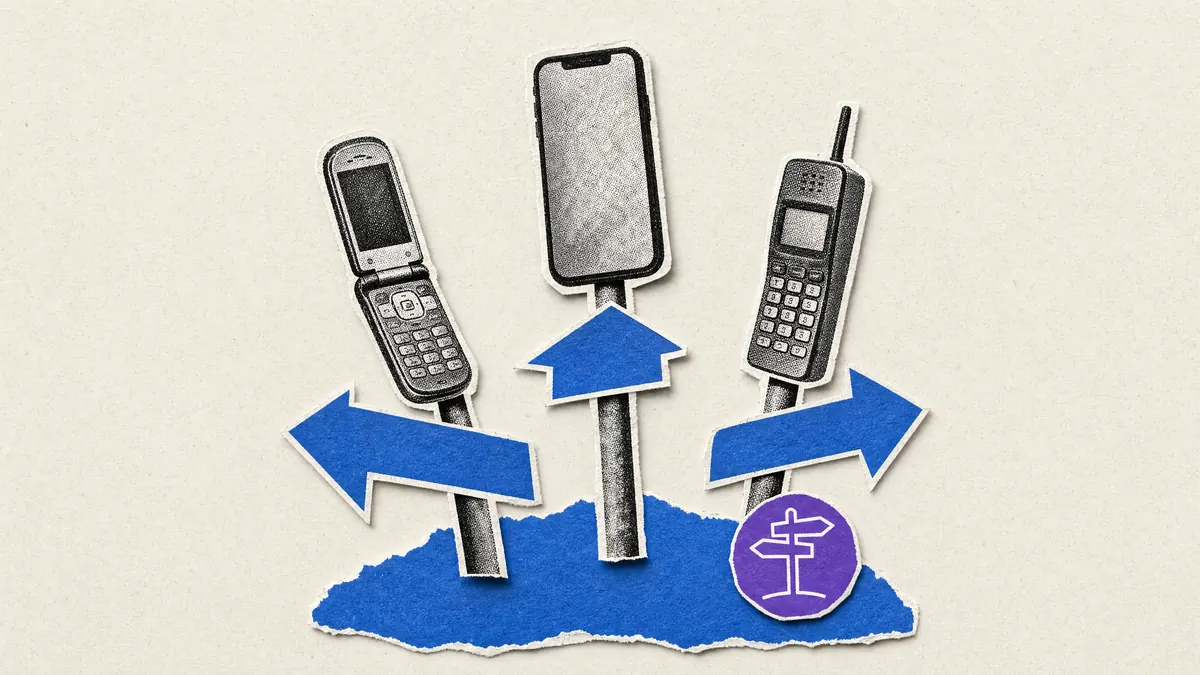
| Route | Best for | Trade-off |
|---|---|---|
| 10DLC | Nearly every agent and agency | Registration paperwork; carrier-assigned throughput |
| Toll-free verified number | Notifications and two-way support at moderate volume | Separate verification; one number, no local presence |
| Short code (5 or 6 digits) | Very high volume, national brands | Leased at hundreds to over a thousand dollars per month; months to provision |
For local presence, which is what gets an insurance text opened, 10DLC is the only one of the three that gives you a number in the lead's own area code.
How this works inside ApexSales.ai

You register your brand and campaigns during onboarding, on day one, and the review comes back in 2 to 5 business days. ApexSales.ai keeps a registered sample-message set in step with your templates, rotates multiple registered numbers for local presence, and applies DNC and quiet-hours checks on every send, as described on the security and compliance page. The registration is filed under your business and moves with you.
Sources
The primary sources behind the rules, dates and figures in this article, checked November 2026. Rules change, so confirm the current version at the source.
- The Campaign Registry: The Campaign Registry and 10DLC (2026)10DLC registration runs through The Campaign Registry via your messaging provider, and a brand must be verified before campaigns are registered.
- The Campaign Registry: CSP User Guide (April 2026)Vetting scores set carrier throughput tiers per brand or campaign, and unvetted brands start in the lowest tier.
- The Campaign Registry: Sole Proprietor PolicyIndividuals without an EIN can register as sole proprietors, a path limited to low daily sending volume.
- CTIA: Messaging Principles and Best Practices (May 2023)Senders need documented opt-in, an accessible privacy policy, opt-out instructions and dedicated rather than shared URL shorteners.
- U.S. Short Code Registry: FAQsShort codes are leased, at $500 a month for a random code and $1,000 a month for a selected one.
- Cornell LII: Campbell-Ewald Co. v. Gomez, 577 U.S. 153 (2016)A text message is a call under the TCPA, so consent for marketing texts is governed by the TCPA.
New to a term in this article? See the sales and compliance glossary.