

Speed is the easy half.
The hard half is doing the work without leaving a trace behind — without missed callbacks, unlogged consent, or a Monday spent reconstructing Friday. Apex is the operating layer that closes that gap for licensed U.S. insurance agents.
Built for compliance before it was a bullet point.
After Hurricane Helene hit St. Petersburg in 2024, Rauf and Oktay spent 24 hours building a system that matched homeowners with contractors in real time. The system worked, but it also exposed a deeper problem: most outreach tools move fast and leave no audit trail behind.
They turned that insight on insurance sales. Rauf shaped the product around what a licensed agent actually has to prove — consent on file, quiet hours respected, opt-outs honored, DNC lists checked before a dial. Oktay built the backend that enforces it at every step. APEX is the result: speed with a paper trail.
By January 2025 the first automated recruiting pipeline was live. The same compliance-first architecture became the foundation for the sales platform APEX ships today.

- 2024Hurricane Helene
- 24 HRSFirst system live
- 2024Compliance model drafted
- JAN 2025Recruiting automated
- 2025APEX ships
Four principles the product answers to.
- i.
Agents are the product
Every screen answers to the person actually on the phone. If a feature makes the dashboard prettier but the day harder, it does not ship.
- ii.
Automation should feel invisible
Good automation removes work you already stopped noticing — the follow-up you meant to send, the reminder you always forget.
- iii.
Compliance is a floor, not a feature
Consent, opt-out, and record-keeping are the baseline for touching a client. We build them in so the team never has to think about them again.
- iv.
Fewer, better tools
One thoughtful system beats seven mediocre ones. We refuse features that fragment the day.
of a licensed agent's week goes to work no client ever thanked them for — stitching tools, re-entering notes, and chasing a callback the CRM forgot. Apex is the piece that gives that third back.
"The tools weren't broken. There were just too many of them, and none of them talked to each other. So the agent became the integration."
Three receipts from an ordinary shift.
Compliance is not a badge on a marketing page. It is the small, boring artifacts a system produces every hour — the message it refused to send, the number it refused to dial, the callback it made on time. These are three of ours.
- HELD14:22:03 UTCConsent not on fileOutbound SMS to (813) ••• 04 21 held pending TCPA opt-in. Agent notified. No message sent.
- BLOCKED14:22:03 UTCNumber on internal DNCDial to (727) ••• 88 05 blocked. Reason: prior opt-out on 03/14. Contact routed to suppressed list.
- ROUTED14:22:03 UTCCallback within SLAMissed call from (813) ••• 17 62 routed to on-shift agent in 42s. Follow-up SMS auto-sent.
Average number of separate tools an Apex team retires within the first quarter — dialer, SMS, scheduler, sequencer, spreadsheet.
Rauf and Oktay.
Two founders from Azerbaijan, national Olympiad winners who met at the University of South Florida. APEX was built on an insurance floor, not a whiteboard.
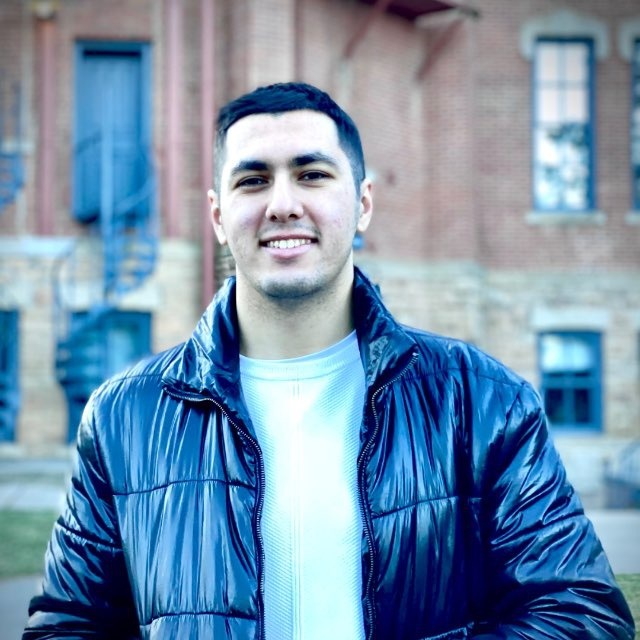
Co-founded APEX with Oktay after seeing how fast outreach tools could break compliance without leaving a trace. Runs product, defines the feature boundary, and built APEX's consent-first model — quiet hours, opt-out enforcement, and DNC scrubbing as defaults, not add-ons. Studied biology and bioinformatics at USF; national Olympiad winner in nanochemistry, genetics, and ecology.
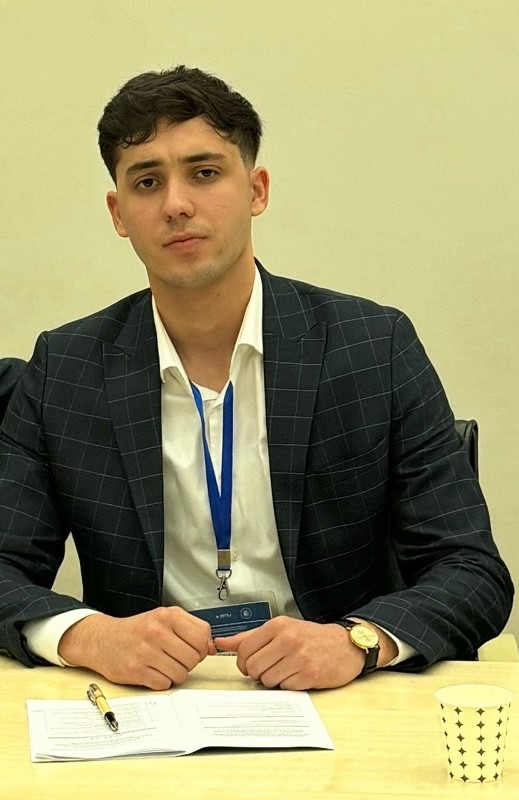
Built the engine. Automated transaction verification and fraud detection for banks in Azerbaijan before turning the same discipline on insurance compliance. Studied computer science at USF. He owns the backend, the architecture, and the security model, which in this industry are one job.
Stellar Business Award, 2025.
Awarded to Caspian Solutions, the parent company behind Apex, for measurable operational gains delivered to U.S. insurance clients during the 2024–2025 cycle. We list it here because it is a fact, not a headline — the work matters more than the plaque.