The short answer
Final expense telesales rewards consistency more than intensity. The agents who last are not the ones who dial hardest on Monday — they are the ones who run the same structured day every day, because the arithmetic of the business only works over volume, and volume only happens when the day has a shape.
Below is a daily operating system: five blocks, what happens in each, and the rules that keep it intact.
Why structure beats effort here
Three things make final expense different from other insurance sales.
The lists are cold and large. You are working volume, not accounts. That means the gap between calls matters more than it does anywhere else — it is the only variable you fully control.
The demographic answers the phone at specific times. Your prospects are largely at home during the day. Mid-morning and mid-afternoon are live hours in a way that 8:00 a.m. and 6:00 p.m. are not.
Emotional load is real. These are conversations about death and money, held with people who are often lonely. Unstructured days lead to attrition, and attrition is the actual failure mode of the business — not poor conversion.
A fixed structure addresses all three: it maximises dials, it puts them in the right hours, and it protects you from the day bleeding into itself.
The five-block day

Times are shown for an agent working an Eastern-time list. Shift the whole grid if your list is elsewhere — and note that the compliance window follows the prospect's local time, not yours.
| Block | Time | Purpose | Rule |
|---|---|---|---|
| 1 | 8:30 – 9:00 | Set up | No dialing |
| 2 | 9:00 – 11:30 | Primary dial block | No admin, no email |
| 3 | 11:30 – 13:00 | Appointments and callbacks | Scheduled only |
| 4 | 13:00 – 15:30 | Second dial block | No admin, no email |
| 5 | 15:30 – 16:30 | Close-out | Applications, notes, list hygiene |
Five hours of dialing, ninety minutes of scheduled conversations, ninety minutes of everything else. That is the whole system.
Block 1 — Set up (30 minutes)
You are not dialing. You are making sure the next two and a half hours have no interruptions in them.
- Load the queue. Enough for the block and no more — at a realistic pace on a cold list, roughly 130–170 dials fit in two and a half hours, so build a queue in that range.
- Confirm the queue is one cohort. Do not mix a fresh list with a nine-month aged file; the script and your energy are wrong for half of it.
- Check yesterday's callbacks are in today's Block 3.
- Confirm your caller ID matches the region you are calling into.
- Close everything else.
Block 2 — Primary dial block (2.5 hours)
The rule is simple and it is the whole discipline: you do not leave the dialer.
Not to look something up. Not to send an email. Not to do a quick bit of admin. Anything that arises gets a tag and gets handled in Block 5.
This is where a power dialer stops being a nice-to-have. Auto-advance through the queue removes the five to forty seconds you would otherwise spend between calls, and across 150 dials that gap is the difference between finishing your queue and abandoning it at 90.
Use five dispositions, no more: connected–interested, connected–not interested, no answer, bad number, callback scheduled. Consistency here is what makes your automation and your reporting work.
Block 3 — Appointments and callbacks (1.5 hours)
Scheduled conversations only. Callbacks from yesterday, appointments booked through your calendar link, and application walkthroughs.
Two things make this block work: published availability so prospects book into real slots rather than a negotiation, and SMS reminders so they turn up. No-shows in final expense are usually forgetfulness rather than avoidance, and a reminder an hour before recovers most of them.
Block 4 — Second dial block (2.5 hours)
Same rules as Block 2, different queue. If Block 2 worked a fresh list, Block 4 works aged data, or a different state, or a different lead source.
Varying the cohort matters more than it sounds. It changes the hour you are reaching people, which changes who is home, and it keeps you from burning a single list at one time of day.
Block 5 — Close-out (1 hour)
The block most agents skip, and the one that decides whether tomorrow works.
- Submit applications while the conversation is fresh.
- Write notes on every connected call — three lines, not an essay.
- Confirm every no-answer from today is enrolled in a follow-up sequence. This should be automatic, but verify it for the first month until you trust it.
- Mark bad numbers so they stop consuming dial time.
- Build tomorrow's queues.
The rule: nobody you spoke to today leaves this block without a scheduled next touch. Not a note that says "follow up." An actual scheduled touch, or an enrollment in a sequence that will handle it.
The compliance layer that runs underneath

None of the above is safe without four things running below it, and in a business built on cold volume they are not optional.
DNC checked before every call and text. The federal registry held roughly 258.5 million numbers as of September 2025 (FTC), growing continuously. On purchased cold lists, expect real match rates.
Quiet hours in the prospect's time zone. Federal rules allow marketing calls and texts between 8:00 a.m. and 9:00 p.m. local to the person you are calling. Several states are tighter — Florida and Oklahoma stop at 8:00 p.m. and cap calls to a person at three per 24 hours on the same subject (Oklahoma exempts licensed insurance agents working within their license); Alabama and Louisiana bar Sunday and holiday calls and Mississippi bars Sunday calls; Texas permits 9:00 a.m. to 9:00 p.m. Monday to Saturday and only from noon on Sunday, and since SB 140 (effective 1 September 2025) its telephone-solicitation law covers texts, with consumer-protection (DTPA) remedies for violations.
If your Block 2 starts at 9:00 a.m. Eastern and your queue contains Pacific numbers, some of those dials are illegal. The queue has to know that.
Number pools with regional caller ID. Spreading volume across numbers and matching the area code to the prospect's region.
An audit log. Every suppressed send, with a reason.
Weekly rhythm
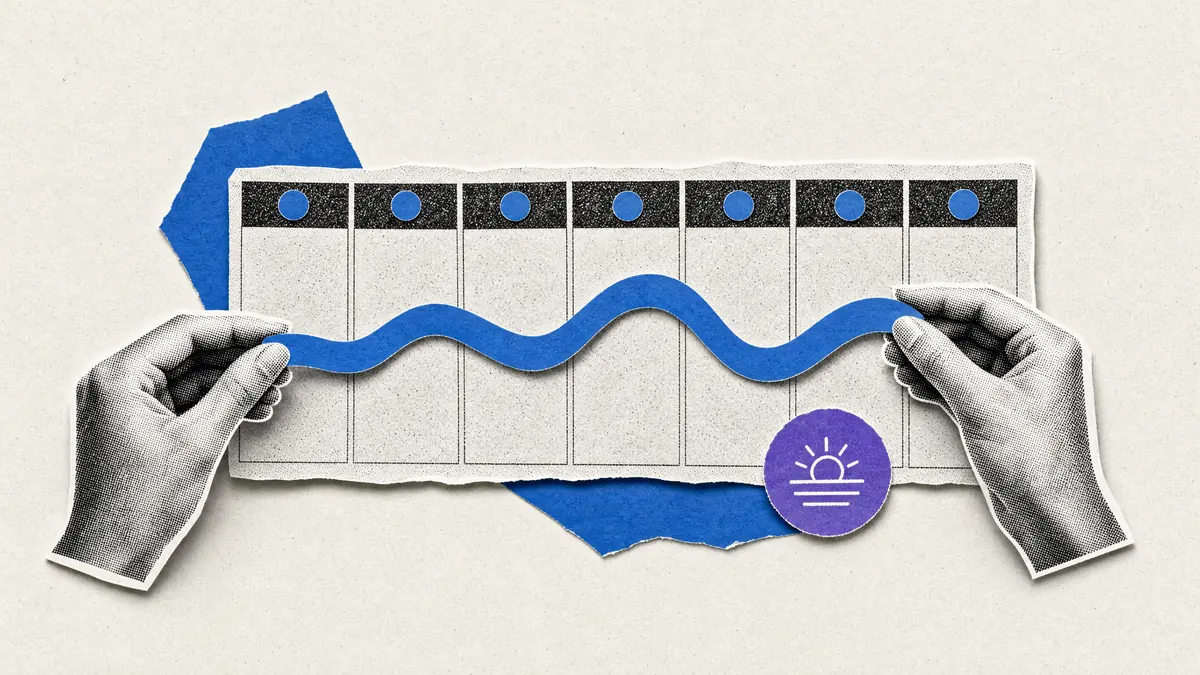
The day repeats. The week has one addition: Friday's Block 5 is doubled.
Use the extra hour to merge duplicates from the week's imports, re-scrub anything over thirty days old, retire lists that produced nothing across two campaigns, and look at reply rates by sequence. A sequence that produced no replies in three weeks is not follow-up, it is noise going out under your name.
What to track
Four numbers, weekly, and only four:
| Metric | Why this one |
|---|---|
| Dials per block | Tells you whether the block held |
| Contacts per 100 dials | Tells you about list quality, not effort |
| Appointments set per week | The leading indicator of income |
| Contacts with no next touch | The leak |
The last row is the one to watch. Everything else is inputs. That one is the thing that quietly costs you the most.
Related reading
Sources
The primary sources behind the rules, dates and figures in this article, checked November 2026. Rules change, so confirm the current version at the source.
- FTC: FTC Releases Annual Do Not Call Registry Data Book (December 2025)The federal Do Not Call Registry held roughly 258.5 million numbers as of September 2025.
- eCFR: 47 CFR 64.1200, FCC telemarketing and telephone solicitation rulesFederal rules limit telephone solicitations, including texts to wireless numbers, to 8 a.m. to 9 p.m. in the called person's local time.
- The Florida Senate: 2026 Florida Statutes § 501.616, commercial telephone solicitationFlorida bars solicitation calls before 8 a.m. or after 8 p.m. and caps them at three per 24 hours on one subject.
- Oklahoma State Courts Network: 15 O.S. § 775C.4, Telephone Solicitation Act of 2022Oklahoma bars solicitation calls before 8 a.m. or after 8 p.m. and allows no more than three per 24 hours on one subject.
- Texas Legislature: Business and Commerce Code chapter 301, § 301.051, telephone solicitation hoursTexas allows solicitation calls 9 a.m. to 9 p.m. Monday to Saturday and only noon to 9 p.m. on Sunday.
- Texas Legislature Online: SB 140, 89th Legislature, enrolled bill textTexas SB 140, effective 1 September 2025, extends telephone-solicitation law to text messages and links violations to Deceptive Trade Practices Act remedies.
New to a term in this article? See the sales and compliance glossary.