
The short answer
Most agents use maybe a fifth of what their CRM can do, and the missing four-fifths is where the time goes. These eleven habits are all small. None takes more than twenty minutes to set up. Together they remove a meaningful amount of daily friction — mostly by making the software do things you are currently doing with your hands and your memory.
Work through them in order. Each builds on the one before.
1. Stop importing dirty lists
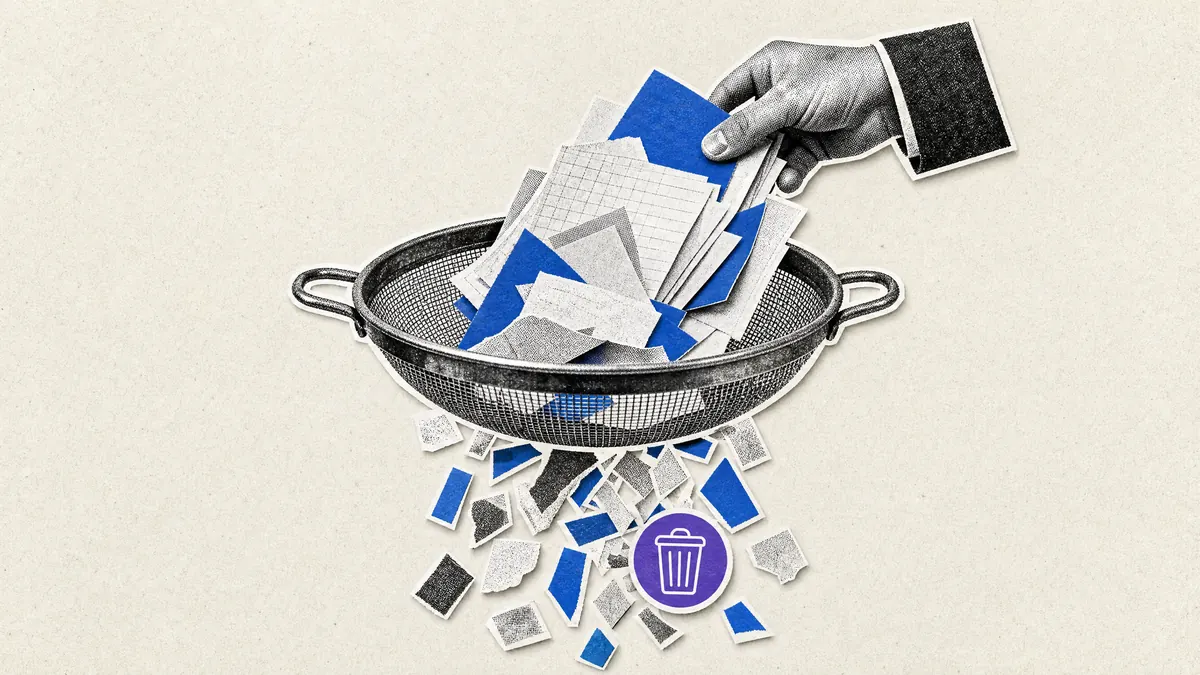
Every downstream problem starts here. A list with duplicate phone numbers, missing states, and no DNC scrub produces double-dials, quiet-hour violations, and a pipeline you cannot trust.
Fix it at the door. Import CSVs with a duplicate policy set deliberately — merge, skip, or create — rather than accepting a default. Make sure the state column is populated, because that is what drives quiet-hour enforcement. And scrub on import rather than later; ApexSales.ai runs a DNC check as part of the import pipeline, on files up to 50,000 rows.
Time to set up: 10 minutes, once. Returns: every day after.
2. Reduce your dispositions to five
Most agents inherit a list of eighteen call outcomes and use four of them inconsistently. Inconsistent dispositions make your reporting meaningless and your automations unfireable, because a trigger cannot key off a field nobody fills in reliably.
Pick five. A workable set: connected-interested, connected-not-interested, no-answer, bad-number, callback-scheduled. Delete or hide the rest. Now your automations have something dependable to trigger on.
3. Let the tag do the work
This is the single highest-leverage habit on the list. Instead of remembering to follow up, apply a tag and let the tag fire the sequence.
The pattern: you finish a call, apply callback-tuesday, and an automation enrolls that contact in the right follow-up. You never open a task list. The tag is the task list.
ApexSales.ai exposes 31 triggers and 37 actions, so the tag can do considerably more than send one message — reassign the lead, create a task for a teammate, branch on a condition, or fire a webhook into another system.
4. Write quick responses for the eight things you type most
Open your sent messages and read the last fifty. You will find eight messages you have written from scratch dozens of times: the callback confirmation, the "sorry I missed you," the appointment reminder, the plan-comparison offer, the polite close.
Save them as quick responses. Then never type them again.
While you are there, add spintax variation so the message reads as written for each person rather than a copy sent a thousand times. It is not a way around carrier filtering; registration, consent and content decide that.
5. Filter to a working list, not a full list
A contact list of 12,000 records is not a work surface. A filtered view of "status = new, imported this week, exclude DNC, sorted by created date" is.
Build three or four saved views that match how you actually work — today's callbacks, this week's new leads, the aged list you are re-engaging — and open a view rather than the database.
6. Put quiet hours in the system, not in your head
Federal telemarketing hours run 8:00 a.m. to 9:00 p.m. in the lead's local time, and several states are tighter: Florida and Oklahoma stop at 8:00 p.m., Rhode Island runs 9:00 to 6:00 on weekdays, and Texas does not permit solicitation before noon on Sunday.
You cannot track that across a multi-state list while you are dialing. Let the platform check the lead's time zone before every send and refuse the ones outside the window. That is a check that should block, not warn.
7. Give leads a link instead of a back-and-forth
"What times work for you?" costs three messages and usually a day. A booking link costs one message.
Publish real availability, block the time you are not free, and let the calendar sync handle the rest. Then turn on SMS reminders — a reminder the day before and an hour before removes most of the no-shows that are simply forgetfulness rather than disinterest.
8. Make stop-on-reply non-negotiable
Any drip sequence you build must stop when the contact replies. Without it, automation will eventually send a "just following up!" message to someone you spoke to yesterday, or worse, to someone who just bought.
This is not a nice-to-have. It is the thing that makes automated follow-up safe enough to leave running.
9. Rotate numbers and match the area code
Sending your entire day's volume through one phone number concentrates risk and looks exactly like what it is. A number pool with load balancing spreads volume, and area-code or state-based caller-ID selection means the person seeing your call recognises the region. For texts, keep every number in the pool on your registered 10DLC campaign: spreading texts across extra numbers to get around carrier filtering is what CTIA's messaging guidelines call snowshoeing.
Set it once. It affects every call and message after.
10. Let AI write the first draft, not the final one
The useful application of AI here is narrow and real: drafting and personalizing a message so you start from something rather than a blank field, and generating spintax variations so a bulk send is not a thousand identical strings.
What it should not do is send on its own. In a TCPA-regulated space, the human approving the message is the control. Use the copilot to remove the blank-page problem, then read what it wrote before it goes.
11. Spend Friday afternoon on list hygiene
Twenty minutes, once a week, in a recurring calendar block:
- Merge duplicates that crept in from the week's imports.
- Mark bad numbers so they stop consuming dial time.
- Look at anyone with no scheduled next touch and either schedule one or close them out.
- Check which sequences produced replies and which produced nothing.
The last one matters most. A sequence that has produced no replies in three weeks is not a sequence, it is noise going out under your name.
The compounding effect
None of these is dramatic on its own. But notice what they do together: the list is clean, so the dialer is efficient; the dispositions are consistent, so the tags fire; the tags fire, so the follow-up runs; the follow-up stops on reply, so you trust it; you trust it, so you leave it on.
That last step is the one that matters. Most agents build automation, do not trust it, and check it manually — which costs more time than not having it. Trust comes from small, reliable behaviours: it stops when they reply, it will not send at 10 p.m., it will not text someone on the DNC list.
Related reading
Sources
The primary sources behind the rules, dates and figures in this article, checked November 2026. Rules change, so confirm the current version at the source.
- eCFR: 47 CFR 64.1200, FCC telemarketing and telephone solicitation rulesFederal rules bar telephone solicitations before 8 a.m. or after 9 p.m. in the called person's local time.
- The Florida Senate: 2026 Florida Statutes § 501.616, commercial telephone solicitationFlorida stops solicitation calls at 8 p.m. local time.
- Oklahoma State Courts Network: 15 O.S. § 775C.4, Telephone Solicitation Act of 2022Oklahoma stops solicitation calls at 8 p.m. local time.
- Rhode Island General Assembly: R.I. Gen. Laws § 5-61-3.6, hours of operation (defined in § 5-61-2)Rhode Island limits unsolicited sales calls to defined hours of operation: 9 a.m. to 6 p.m. on weekdays and 10 a.m. to 5 p.m. Saturdays.
- Texas Legislature: Business and Commerce Code chapter 301, § 301.051, telephone solicitation hoursTexas does not permit telephone solicitation before noon on Sunday.
New to a term in this article? See the sales and compliance glossary.