The short answer
Most leads are lost between touch two and touch four — the gap where an agent means to follow up, gets busy, and does not. A written sequence closes that gap because it does not depend on anyone remembering.
Below is a seven-touch sequence over fourteen days, with the actual message text, the delay, and the exit condition for each. Copy it, change the voice to sound like you, and run it. The one rule you cannot skip is at the end.
The sequence at a glance

| Touch | Day | Channel | Purpose | Exits on |
|---|---|---|---|---|
| 1 | 0 | Call | First contact attempt | Connect |
| 2 | 0 | SMS | Missed-call bridge | Reply |
| 3 | 2 | Call | Second attempt, different hour | Connect |
| 4 | 3 | SMS | Value, not chase | Reply |
| 5 | 6 | Call | Third attempt, different day of week | Connect |
| 6 | 8 | SMS | Question they can answer in one word | Reply |
| 7 | 14 | SMS | Clean close | Reply or opt-out |
Two things about the shape. Calls and texts alternate rather than stacking, so no single channel carries the whole burden. And attempts move around the clock and the week — a lead who never answers at 10 a.m. Tuesday is not necessarily unreachable, they may just work mornings.
The messages

Replace the bracketed fields with your own. Keep the identification in touch two and the opt-out in the final touch; both are there for a reason.
Touch 1 — Day 0, call
No script here beyond the obvious: if they answer, the sequence ends and a conversation begins. If they do not, do not leave a voicemail on the first attempt. Send touch two instead — it gets read.
Touch 2 — Day 0, SMS, within one hour of the call
Hi {{first_name}}, this is [Your Name] with [Agency]. I just tried you about the [Medicare / ACA / life] coverage information you requested. Is now a bad time, or would later this week be easier?
Why it works: it identifies you immediately, references the reason for contact, and asks a question with two easy answers. "Bad time" is as useful a reply as "later this week" — both tell you the number is live and the person is reachable.
Touch 3 — Day 2, call
Call at a materially different hour than touch one. If touch one was mid-morning, make this one late afternoon. Leave a voicemail this time, and keep it under fifteen seconds: who you are, why you are calling, and that you will text the details.
Touch 4 — Day 3, SMS
{{first_name}} — [Your Name] again. Not chasing you, just wanted you to have this: [one specific, useful thing]. If you'd rather I stop reaching out, just say the word.
Why it works: it gives before it asks, and it hands them an easy exit. Offering the exit early tends to reduce complaints and improves the quality of who stays on the list. The "one specific useful thing" should be genuinely useful and specific to their situation — a plan-comparison offer, a relevant deadline, a short answer to the question they were probably researching.
Touch 5 — Day 6, call
Different day of the week from your previous two attempts. This is the last call attempt in the sequence.
Touch 6 — Day 8, SMS
{{first_name}}, quick one — are you still looking at [coverage type] for this year, or have you got it sorted? Either answer is fine, just don't want to keep bothering you if it's handled.
Why it works: it is answerable with one word, and it explicitly legitimises "no." A yes-or-no question after a week of silence outperforms another offer, because the ask is smaller than the offer.
Touch 7 — Day 14, SMS, the clean close
{{first_name}} — I'll stop here so I'm not cluttering your phone. If anything changes with your [coverage type], I'm at [phone]. All the best. Reply STOP to opt out.
Why it works: it closes the loop honestly and leaves the door open. A meaningful number of replies to any sequence arrive on the final message, because it is the one that does not ask for anything.
The rule you cannot skip

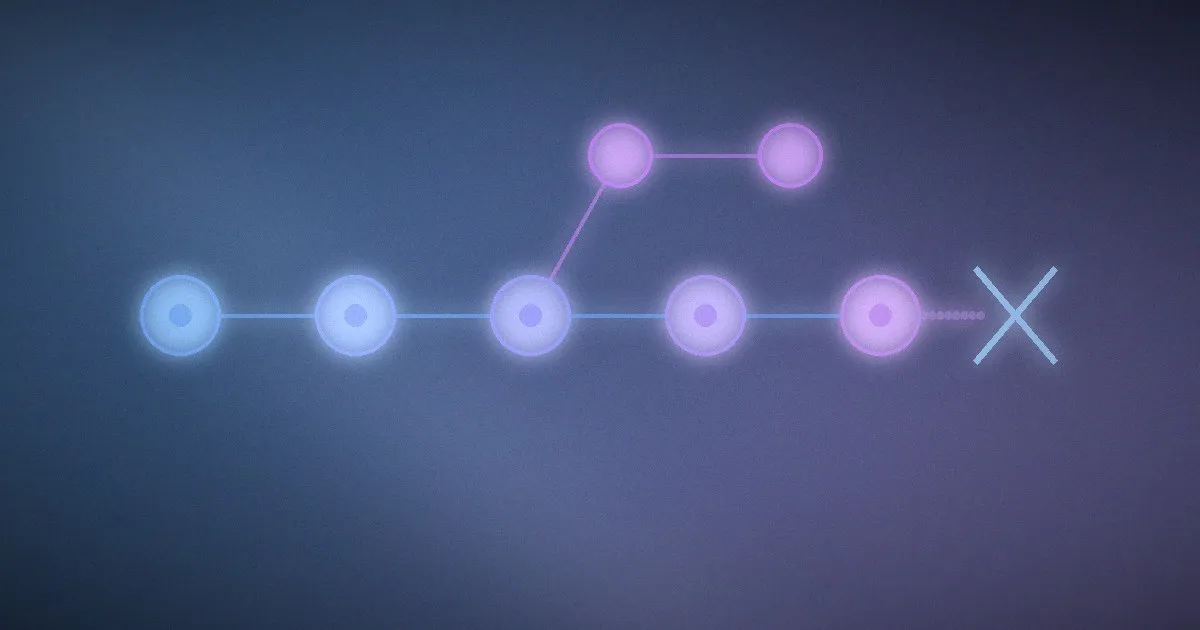
Every touch must stop the sequence on reply.
Not pause. Stop. If someone replies to touch two, touches three through seven must never fire. Without that, your automation will eventually send "not chasing you" to a person you spoke to yesterday, or a re-engagement message to a client who just bought — and one of those messages will cost you a relationship you cannot get back.
In ApexSales.ai, drip campaigns support stop-on-reply per contact, with per-contact sequence tracking, so the sequence state is visible on the record rather than being something you infer.
Configuration that makes it safe to leave running
Beyond stop-on-reply, four settings decide whether this sequence is an asset or a liability.
Quiet hours enforced by the lead's time zone. Federal rules restrict marketing calls and texts to 8:00 a.m. – 9:00 p.m. local to the recipient, and states including Florida, Oklahoma, and Texas are stricter. A scheduled touch that lands at 7:30 a.m. Pacific because your automation runs on Eastern time is a violation your automation created. The platform should block it, not send it.
A DNC check before every send. Sequences run for days. A number can move onto the registry between enrollment and touch six. Check at send time, not just at enrollment.
Throttling. If you enroll 800 leads at once, touch two goes out as a burst of 800 messages from your numbers. Spread it.
Message variation. Seven touches times hundreds of contacts is a lot of identical strings. Spintax variation keeps each touch reading as a personal message rather than a copy.
Adapting the sequence
For aged leads, stretch the delays. Day 0, 3, 7, 12, 18, 25, 35. An aged lead has no urgency and a fourteen-day sprint reads as pressure.
For inbound web leads, compress the front. Touch one within five minutes, touch two within fifteen. Then rejoin the schedule above at day two. Intent decays fastest in the first hour.
For existing clients at renewal, replace touches four and six. A client does not need a re-engagement message; they need a review invitation and a calendar link.
For AEP, compress everything into ten days and add a booking link to touches four and six. With the annual enrollment window running 15 October to 7 December, a fourteen-day sequence started in mid-November finishes after the window closes.
What to measure
Look at reply rate by touch, not just by sequence. A sequence with a 4% overall reply rate where touch two produces almost all of it is telling you that touches three through seven are mostly sending into silence. That is either a message problem or a list problem, and it is worth knowing which.
Also watch opt-out rate by touch. A spike at one specific touch means that message is the problem — rewrite it rather than shortening the whole sequence.
Related reading
Sources
The primary sources behind the rules, dates and figures in this article, checked November 2026. Rules change, so confirm the current version at the source.
- eCFR: 47 CFR 64.1200, FCC telemarketing and telephone solicitation rulesRequires prior express written consent for autodialed marketing, caller identification on telemarketing, and an 8 a.m. to 9 p.m. local window, texts included.
- FCC: Report and Order on revoking consent to robocalls and robotexts, FCC 26-67 (October 2026)Revocations must be honored within ten business days, through any reasonable means unless the caller clearly discloses an exclusive opt-out method.
- CTIA: Messaging Principles and Best Practices (May 2023)Text senders should give clear opt-out instructions such as 'Reply STOP' and honor opt-out requests.
- FTC: FTC Releases Annual Do Not Call Registry Data Book (December 2025)Millions of numbers join the Do Not Call Registry each year (4.7 million in fiscal 2025), so check DNC status at send time.
- eCFR: 42 CFR 422.62, election of coverage under a Medicare Advantage planThe Medicare annual enrollment window runs 15 October to 7 December.
- The Florida Senate: 2026 Florida Statutes § 501.616, commercial telephone solicitationFlorida is stricter than federal rules: no solicitation calls before 8 a.m. or after 8 p.m. local time.
- Oklahoma State Courts Network: 15 O.S. § 775C.4, Telephone Solicitation Act of 2022Oklahoma is stricter than federal rules: no solicitation calls before 8 a.m. or after 8 p.m. local time.
- Texas Legislature: Business and Commerce Code chapter 301, § 301.051, telephone solicitation hoursTexas is stricter than federal rules: solicitation calls start at 9 a.m. Monday to Saturday and at noon on Sunday.
New to a term in this article? See the sales and compliance glossary.